


Some sixty French-speaking science journalists met in Dakar from October 11 to 15, 2022 to discuss their profession in the face of the climate emergency. Six days of conferences, round-table discussions and workshops on a range of climate-related topics: neglected diseases in Africa that could migrate north as a result of climate change, the impact of climate change on agriculture and more. French-language scientific publications also took part in the debates.
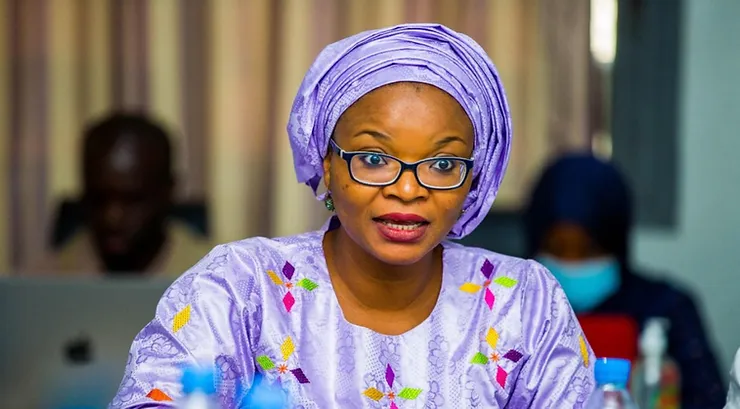
Mame Penda Ba, editor-in-chief of Global Africa magazine and director of the Laboratoire d’analyse des sociétés et pouvoirs / Afrique – Diasporas (LASPAD), took the opportunity to call for greater recognition of the profession of researcher and for research funding. She noted that “in Africa today, the training of researchers has become a peripheral issue. There is no funding for research. Researchers are obliged to publish internationally, only to perish or stop publishing”. She was speaking as part of a panel devoted to the “Decolonization of the media”, divided into two parts: the first focused on the need to change the way the Western media look at Africa, while the second was devoted to French-language publishing. In order to change the Western media’s perception of the African continent, scientists and journalists alike need to be involved in research in order to produce quality articles. Financial resources are certainly lacking, but this is not a good enough reason to ignore the productions made by researchers and published by CODESRIA, among others. As for certain scientific publications in Africa, failure to respect research methodology disqualifies certain scientific productions. This is the purpose of the École des Jeunes Chercheurs set up as part of the Global Africa project, a partner of this symposium, which aims to create and perpetuate a journal of excellence from the continent, by strengthening scientific research and production capacities, which are not the responsibility of the scientific journalist.
The latter is not a scientist. He is first and foremost a journalist specializing in health, the environment, agriculture, technology and other areas,” points out Kossi Elom Balao, President of the Réseau des journalistes scientifiques d’Afrique francophone (RJSAF). A good science journalist must always be committed to training. They are called upon to help the public think about information. He or she must go beyond factual news coverage. For example, if there’s a flood or a pandemic, you need to be interested in the causes, consequences and frequency of the phenomenon.
In keeping with the logic of capacity building, the first round-table discussions revolved around questions about the future of science journalists: lessons learned from the Covid-19 pandemic and whether they are destined to become climate journalists. Expert panels focused first on climate change and food and water insecurity, with the participation of experts from Côte d’Ivoire’s IGE, the Consultative Group on International Agricultural Research (CGIAR) and Senegal’s LEMAR. The second panel focused on neglected and emerging diseases in Africa, with scientists from the Drugs for Neglected Diseases initiative (DNDI) in the Democratic Republic of Congo and the Institut Pasteur in Dakar. Several workshops were held on the science journalist’s toolbox, the production of science podcasts and the production of a science program, among others. The conference for French-speaking science journalists ended with a series of field visits to agro-ecology farms, the Bel Air technical platform, laboratories at the Institut Pasteur in Dakar, and a visit to the Radio France International (RFI) studios in Dakar, among others.
The RJSAF is a not-for-profit association founded in Lausanne, Switzerland, at the 11th World Conference of Science Journalists, to promote and popularize science in the French-speaking world.