


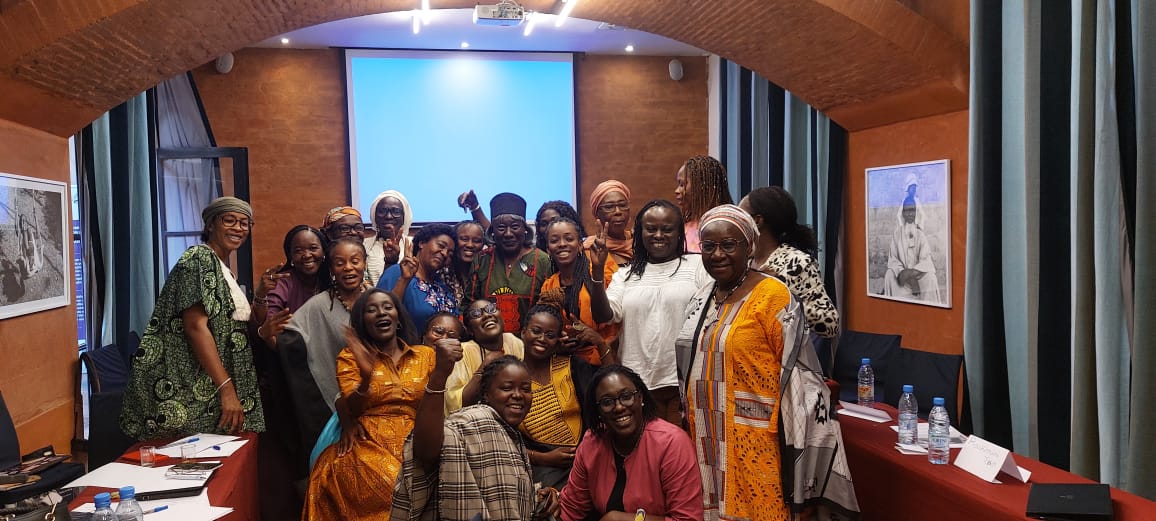
On November 9 and 10, a national workshop was held in Dakar to produce a reference model for adolescent health care. The objectives of the workshop were to produce, in a participatory and inclusive manner, the major elements for composing a holistic and replicable model of restorative care for victims/survivors of gender-based violence, and to launch the establishment of a national network of facilities to receive them.
The meeting was part of the implementation of the HIRA project run by the Laboratoire d’analyse des sociétés et pouvoirs/Afrique-Diaspora (LASPAD) at the Université Gaston Berger (UGB) in Saint-Louis. Actors from a variety of backgrounds came together to co-construct with the project team a holistic and replicable model of care focused on the issues of reception, counseling and accommodation for victims/survivors. All this, based on the research results obtained and their wealth of experience.
As a reminder, four major studies were carried out as part of the first phase of the project. The first was a national mapping of care facilities for victims of gender-based violence in Senegal. The second was a monograph on the Kullimaaroo center in Ziguinchor. The third is a survey of best practices in the care of victims of gender-based violence in Senegal. Finally, the fourth study looks at perceptions of gender-based violence (GBV) among adolescent girls in Senegal, and at sexual and reproductive health. All these surveys were presented during the workshop by the researchers in charge and the young members of the advisory committee who carried out the fieldwork.
After each presentation, there was time for discussion, in particular to clarify the information gathered and to address the concerns of partners and managers of accommodation facilities. The latter realized the need to form a network in order to pool forces, but also to implement advocacy and capacity-building.
For Ndèye Marie Thiam, director of the Kullimaaroo center in Ziguinchor, this will enable them to get to know each other, pool their strengths by sharing experiences, refer victims to centers in neighboring regions, and speak with one voice during advocacy campaigns, among other things.
The workshop for drafting the reference model was held on Saturday November 12, 2022 in Ziguinchor with the HIRA project coordination team, the Kullimaaro center team and a member of the Gënji hip hop movement. The team was divided into two groups for more efficient drafting. The first group worked on the issues of reporting, referral and accommodation of victims, and the second on information, training and reintegration. Discussions and the drafting of the model drew heavily on all the proposals, concepts and opinions put forward by shelter managers, actors and participants at the November 9-10 workshop, as well as on the experience of the Kullimaaroo team.
In addition, the idea has been put forward of developing an architecture adapted to shelters that would preserve the anonymity and privacy of victimized residents in relation to visitors to the center. This will be the subject of a study to be added to the reference model.