Between 2010 and 2013, Senegal’s institutional and political landscape was profoundly marked by the adoption of two major policies: the parity representation policy and the new decentralization policy. These were formalized and popularized under the names of the parity law and Act 3 of decentralization.
Reformative, because they both aim for women’s autonomy within political institutions (parity) and within local authorities in the management of their territories (Act 3). They are also functionally linked, because while the law on parity makes the presence of women in deliberative bodies a requirement, it is Act 3 that gives this presence a substantial content through the competences transferred and the governance and development objectives assigned to local institutions.
To meet the needs identified, the “Baamtaré Rewbé: Promoting women’s political participation and leadership in local governance” project was co-constructed by the Agence régionale de développement (ARD) de Saint louis and LASPAD in partnership with the Spanish Cooperation (AECID).
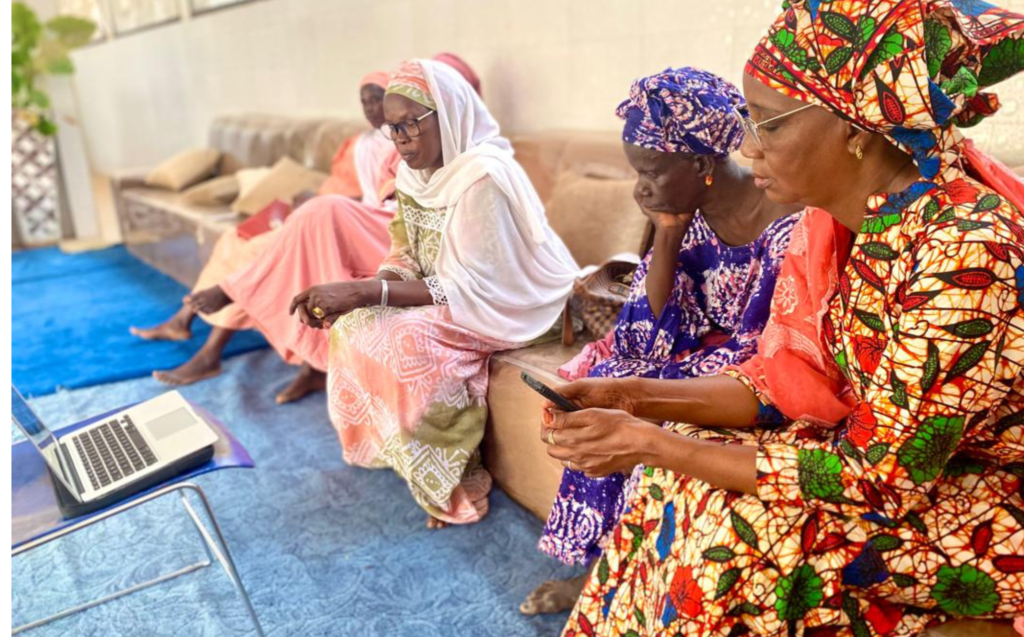
Its aim is to build the capacities of elected women and CSOs on the one hand, and to raise awareness at community level for gender-sensitive participative local governance on the other. In order to test the model resulting from the studies, this project is a pilot stage for which five communes in the Podor department (Fanaye, Ndiayène-Pendao, Doumga Lao, Aéré Lao and Pete) are being targeted following a selection process based on objective criteria.
The project’s main aim is to strengthen their cognitive, discursive and political capacities and skills in the following areas: democratic governance, and the missions devolved to local elected officials within the framework of their mandates as local elected officials, with a view to the efficient, transparent, equitable and participatory management of local affairs; local development; and the design, implementation and evaluation of sustainable development public policies for inclusive development that takes into account women’s strategic interests and ensures the full realization of women’s rights.
A baseline study carried out following the launch of the project identified training needs for the beneficiaries.
The work to be carried out covers a general coordination mission, on the one hand for the production of written and video content for the training modules intended for the project targets.
On the other hand, it aims to facilitate the implementation of training and capacity-building sessions in the communes targeted by the project.