The COVID-19 epidemic and accompanying response measures have exacerbated structural inequalities. These include inequalities between men and women, between women themselves, between the poor and the rich, between informal and formal sector workers, between those who live in major centers and those who are far from them, and so on.
An intersectional analysis is therefore needed to focus on women and other vulnerable groups, and thus understand their specific experiences (linked to age, class, geography) in a context of crisis. The intersectional approach also makes it possible to identify the limits of state intervention (or lack of it), and those of community responses in their ability to adequately address the specific needs of various groups, including women.
The FACE program aims to introduce a critical feminist intersectional analysis and response to current national and transnational measures to address the social, economic and political impact of Covid-19 in Africa.
Carried out simultaneously in Kenya, Senegal and South Africa, FACE provides a comparative dimension that is essential for developing innovative interventions.
Drawing not only on national situations, but also on experiences in other regions of the continent, FACE aims to build a network capable of influencing public policy and post-Covid-19 interventions, from a feminist point of view.
Finally, the aim is to create a more dynamic public commitment to feminist alternatives.
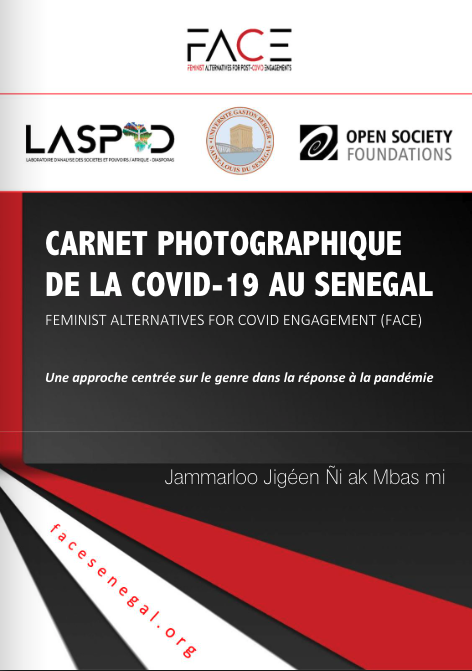
In its first phase, FACE produced six (06) documentary films, Rapid research papers and a photographic notebook of Covid-19.